
University of Debrecen medical students excel in the robotic surgery simulation week
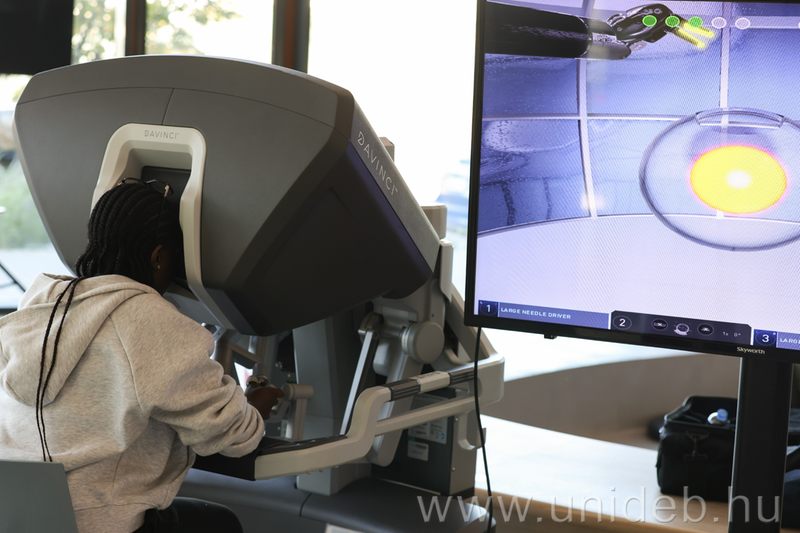
Medical students and residents performed exceptionally well during robotic surgery training sessions held at the University of Debrecen from October 12 to 16. Throughout the week, participants had the opportunity to try out robotic surgery simulators and related virtual reality (VR) systems on display at the university’s Learning Center. Robotic-assisted surgery has already been incorporated into several courses in Debrecen’s medical education curriculum, with further strengthening of robotic surgery training identified as a key priority.
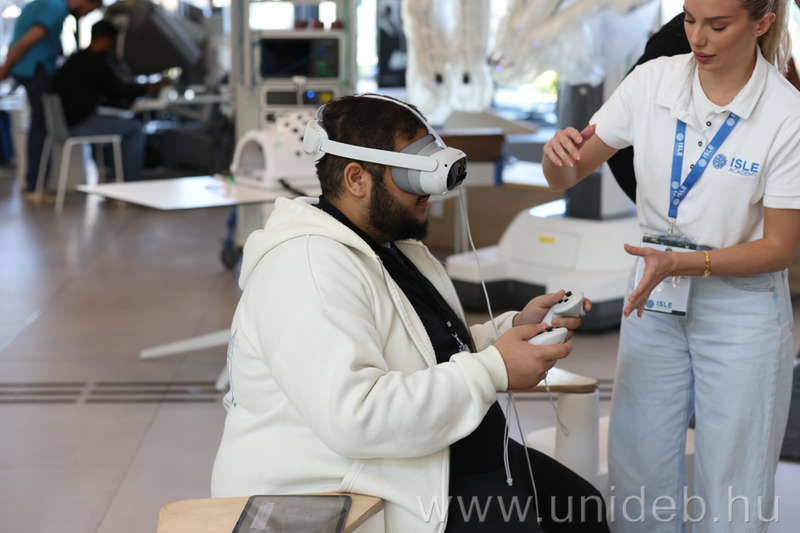
Before the simulation week, medical students and residents could register for practical sessions across five workstations, featuring da Vinci surgical simulators with consoles and the ERMIS-VR simulation system. A total of 21 sessions were organized.
Participants were required to complete various practical tasks using robotic surgery simulators and associated virtual reality systems. More than 300 people completed the exercises, with fifth-year medical students making up the largest group.
“We are extremely proud that so many of our students took part in this unique and highly engaging practical simulation programme. We are particularly pleased with their outstanding performance. In addition to competitions held among the top performers in individual sessions, the organizers reported generally excellent manual dexterity throughout the week. This reflects our medical students’ interest and abilities, and perhaps also highlights the importance of our various practical skills-development programmes,” said Professor Norbert Németh, Dean of the Faculty of Medicine at the University of Debrecen.
“Based on the success of this programme and the experience gained, the Faculty of Medicine intends to continue supporting similar events in the future. I hope that some of the students participating in this and future programmes will go on to become the robotic surgeons of tomorrow,” he added.
Boróka Dencs won the grand prize, earning the opportunity to participate in a training programme organized by ISLE Academy in Athens. Roland Henrik Mezei took second place, Zsombor Kovács finished third, and Attila Béres placed fourth. Duong Trung Kien, Laiba Jamal, Hasna Fawmy and Dóra Százvai also advanced to the semifinals.
Other top performers in the individual sessions included Jishnu Roy Choudhuri, Majdi Esau, Mustafa Alazzawi, Csaba Mező, Péter Horai, Dam Quang Ngoc Khiet, Rayhan Shafi and Mahdi Hakim.
Since the programme was launched in 2024, more than 1,200 robot-assisted surgeries have been performed at the University of Debrecen. This cutting-edge technology is also creating new opportunities for medical education. Robotic surgery has already been incorporated into several courses in the university’s medical curriculum, and expanding this area of training remains a key objective and part of the institution’s educational development plans.
“During this simulation week, participants were able to practise only a few basic movements and familiarize themselves with precision technology under the guidance of technicians from ISLE Academy. Training future surgeons begins with a series of practical courses that progressively develop fundamental surgical skills. However, acquiring genuine surgical knowledge, experience, skills and competencies is a long journey,” the dean emphasized.
“I believe it is important for students to gain an early insight into the world of robotic surgery and become familiar with emerging technologies from the initial stages of their medical education,” he added.
The week-long robotic surgery forum and practical simulation programme was organized through a collaboration between the University of Debrecen’s Faculty of Medicine and the Athens-based ISLE Academy (Innovation, Simulation & Learning Ecosystem), part of the SofMedica Group.
(unideb.hu)