
The new pacemaker technology was used for the first time in Debrecen
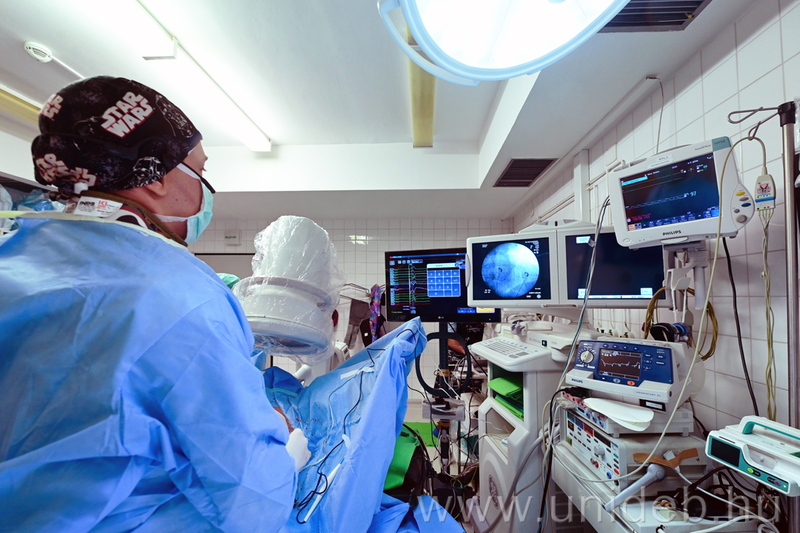
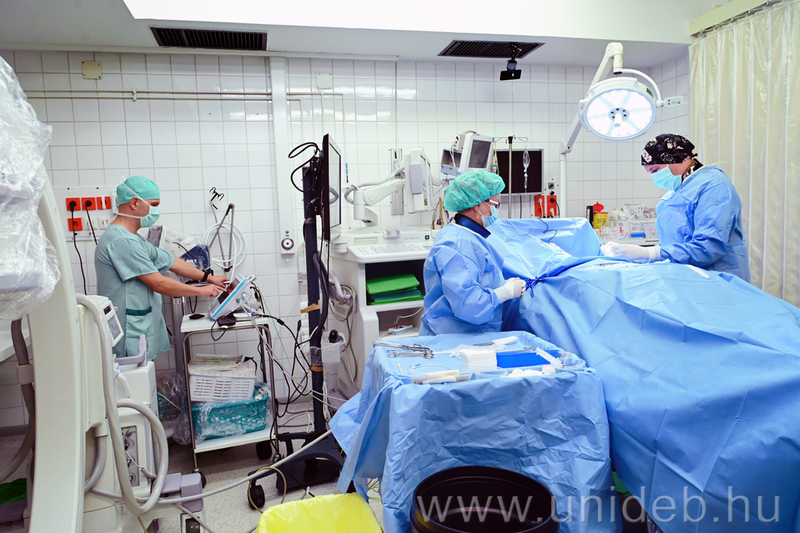
The Department of Cardiology and Cardiac Surgery at the Clinical Centre of the University of Debrecen has become the first institution in Hungary to use a new device during conduction system pacing pacemaker implantation. The innovative technology allows doctors performing the procedure to monitor the heart’s electrical activity in real time and assess pacing parameters through measurements, helping them determine the optimal position for the electrode. The first procedures using the device were performed at the clinic in recent days and were broadcast live to specialists at medical institutions across Hungary.
Pacemaker implantation plays a fundamental role in the treatment of various heart rhythm disorders. The Department of Cardiology and Cardiac Surgery at the Clinical Centre of the University of Debrecen implants between 600 and 700 cardiac electronic devices every year. Alongside conventional procedures, modern pacemaker therapies that activate the heart’s natural electrical conduction system are becoming increasingly important. One of the main directions of development is to ensure that, in addition to maintaining an appropriate heart rate, the heart’s electrical activation retains as much of its natural physiological characteristics as possible.
“During conduction system pacing, the electrode is positioned in the area corresponding to the heart’s own electrical conduction system, allowing electrical activation to occur in a way that closely resembles natural conduction. Therefore, successful implantation requires more than simply placing the electrode in the correct anatomical position: the quality of the electrical response triggered by pacing must also be assessed. The new MicroPace OneStim device helps us do exactly that,” explained Gábor Sándorfi, a specialist at the Department of Cardiology and Cardiac Surgery.
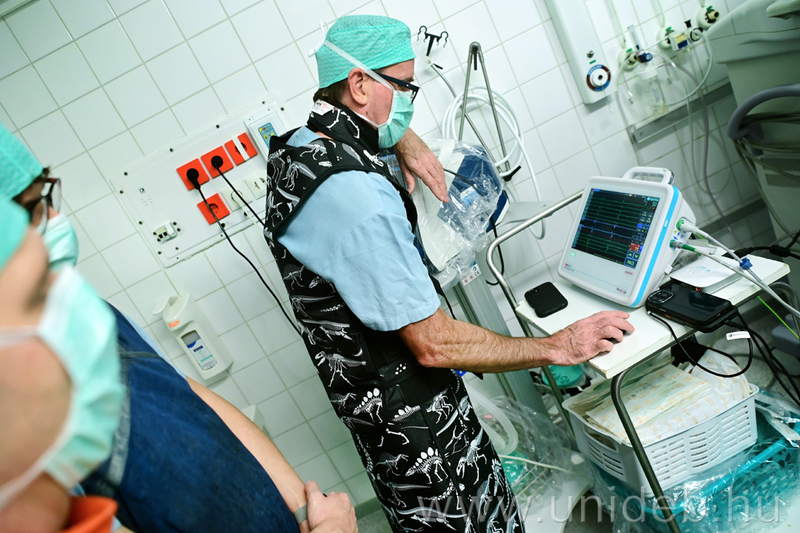
The MicroPace OneStim is a specialised cardiac stimulation and measurement system that delivers electrical impulses during pacemaker implantation while displaying and analysing the heart’s electrical signals, including changes visible on the electrocardiogram (ECG). The device also continuously monitors changes in electrical impedance associated with pacing, helping doctors compare different electrode positions. In addition to its compact design, one of its main advantages is that it was specifically developed to support conduction system pacing procedures.
“By simultaneously evaluating ECG signals and pacing parameters, the device provides immediate feedback to the doctors performing the procedure. This makes it easier to assess different electrode positions and verify whether the pacing is producing the desired electrical response,” said László Nagy, senior lecturer and specialist at the department.
Debrecen specialists were the first in Hungary to use the MicroPace OneStim device during conduction system pacing pacemaker implantations. The procedures were also broadcast live to interested professionals at several medical institutions across the country.
Commenting on the procedures, Judit Barta, director of the Department of Cardiology and Cardiac Surgery at the University of Debrecen, emphasised that the introduction of MicroPace OneStim is another example of the institution’s active involvement in bringing emerging cardiology technologies to Hungary. She added that the department is committed to providing high-quality patient care, applying modern cardiological procedures and promoting professional innovation.
“One of our key strategic goals is not merely to follow international professional and technological developments in the rapidly advancing field of cardiology, but also to actively participate in their introduction and application in Hungary. Conduction system pacing is a good example of how modern technology, advanced medical expertise and a patient-centred approach can come together. For us, the true value of innovation lies in ensuring that new solutions also benefit everyday patient care and contribute to improving patients’ quality of life in the long term,” said Judit Barta, associate professor and head of the Department of Cardiology and Cardiac Surgery at the University of Debrecen.
The department director added that, alongside technological development, the continuous training of medical professionals, the sharing of experience and the integration of new procedures into education and clinical research are also of great importance.
The department aims not only to improve its own patient care through the introduction of advanced procedures, but also to contribute to the development of the cardiology community across the region and throughout Hungary.
Medical specialists emphasise that further clinical experience and long-term follow-up data will be needed to assess the long-term benefits of conduction system pacing. Nevertheless, the technique represents an important opportunity to make pacemaker therapy more closely aligned with the heart’s natural functioning.
(unideb.hu)